
Aug 18, 2026
What CTF Hacking Taught Me
Anticipating failure is a trainable skill, not a personality trait. Most hiring processes just aren't built to test for it directly. A CTF scoreboard tends to reveal it anyway.
Cybersecurity
CTF
Software Engineering
Every Input Becomes a Question
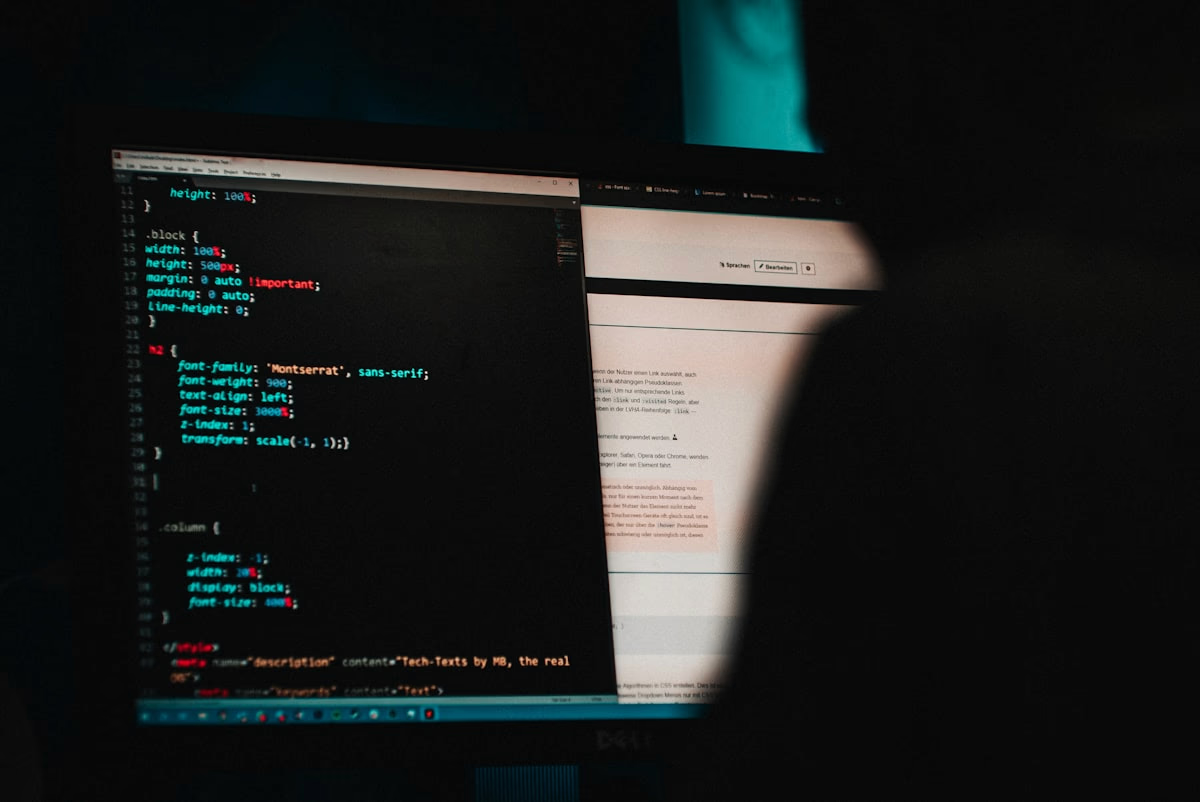
Placing 4th and later 7th nationally at Hack4Gov, a government-run Capture the Flag competition, isn't the kind of line that fits neatly into a resume bullet point about 'strong problem-solving skills.' It's a room full of teams racing to break into deliberately vulnerable systems before the clock runs out, live-scored, no partial credit for effort, no answer key to fall back on when the obvious approach doesn't work. What that experience actually proves rarely shows up in a standard interview: the instinct to look at a finished feature and immediately ask 'how would I break this,' before a user or an attacker ever gets the chance to ask it first. Most hiring processes are built to screen for what a candidate can build — portfolio pieces, take-home assignments, a whiteboard problem solved cleanly under mild pressure. Far fewer are built to screen for what a candidate can anticipate going wrong, mostly because it's genuinely hard to test for in a standard interview format. A CTF placement is one of the few credentials that demonstrates it directly, under real pressure, against real opposition, with nothing to hide behind.

Time Pressure Reveals Real Understanding

A Signal Job Descriptions Miss

Latest Updates
(JD® — 02)
©2026



Aug 18, 2026
What CTF Hacking Taught Me
Anticipating failure is a trainable skill, not a personality trait. Most hiring processes just aren't built to test for it directly. A CTF scoreboard tends to reveal it anyway.
Cybersecurity
CTF
Software Engineering
Every Input Becomes a Question
Placing 4th and later 7th nationally at Hack4Gov, a government-run Capture the Flag competition, isn't the kind of line that fits neatly into a resume bullet point about 'strong problem-solving skills.' It's a room full of teams racing to break into deliberately vulnerable systems before the clock runs out, live-scored, no partial credit for effort, no answer key to fall back on when the obvious approach doesn't work. What that experience actually proves rarely shows up in a standard interview: the instinct to look at a finished feature and immediately ask 'how would I break this,' before a user or an attacker ever gets the chance to ask it first. Most hiring processes are built to screen for what a candidate can build — portfolio pieces, take-home assignments, a whiteboard problem solved cleanly under mild pressure. Far fewer are built to screen for what a candidate can anticipate going wrong, mostly because it's genuinely hard to test for in a standard interview format. A CTF placement is one of the few credentials that demonstrates it directly, under real pressure, against real opposition, with nothing to hide behind.
Time Pressure Reveals Real Understanding
A Signal Job Descriptions Miss
Latest Updates
(JD® — 02)
©2026
Aug 18, 2026
What CTF Hacking Taught Me
Anticipating failure is a trainable skill, not a personality trait. Most hiring processes just aren't built to test for it directly. A CTF scoreboard tends to reveal it anyway.
Cybersecurity
CTF
Software Engineering
Every Input Becomes a Question
Placing 4th and later 7th nationally at Hack4Gov, a government-run Capture the Flag competition, isn't the kind of line that fits neatly into a resume bullet point about 'strong problem-solving skills.' It's a room full of teams racing to break into deliberately vulnerable systems before the clock runs out, live-scored, no partial credit for effort, no answer key to fall back on when the obvious approach doesn't work. What that experience actually proves rarely shows up in a standard interview: the instinct to look at a finished feature and immediately ask 'how would I break this,' before a user or an attacker ever gets the chance to ask it first. Most hiring processes are built to screen for what a candidate can build — portfolio pieces, take-home assignments, a whiteboard problem solved cleanly under mild pressure. Far fewer are built to screen for what a candidate can anticipate going wrong, mostly because it's genuinely hard to test for in a standard interview format. A CTF placement is one of the few credentials that demonstrates it directly, under real pressure, against real opposition, with nothing to hide behind.
Time Pressure Reveals Real Understanding
A Signal Job Descriptions Miss
Latest Updates
©2026